Is It Time to Swap Words for Numbers in Hospital Wayfinding?
By Karen Zwart Hielema
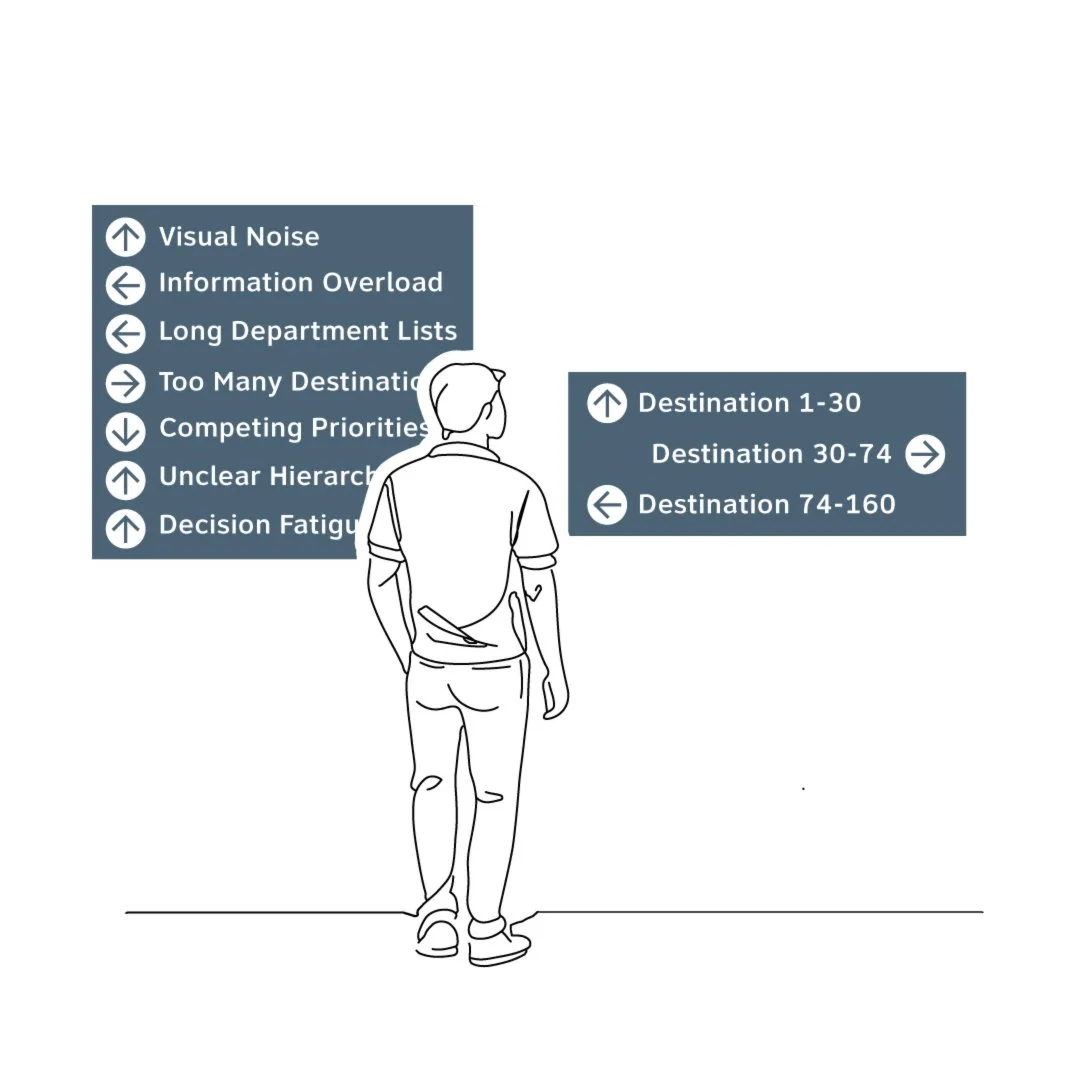
I’ve been looking more closely at this question over the last few years. For most of us in North America, a numerical-based system in healthcare feels unusual. We’re familiar with it in places like hotels—finding your room after a long flight—or racing through an airport to reach your gate. It’s simple. It’s direct. It works when there are many destinations and you need clarity fast.
As I dig deeper into how numerical systems function in healthcare environments, I’m discovering that they actually support many of the core goals we have as healthcare wayfinding designers. In fact, they align beautifully with these top three:
Stress reduction
Lowering cognitive load
Inclusivity
Hospitals are inherently stressful places. So how do we reduce stress and mental effort for someone simply trying to get to their appointment?
Coming from my foundation as a healthcare architect, I always return to the same starting point: design first. Begin with intuitive journeys—using natural light, material cues, and architectural clarity. Then layer in touchpoints, therapeutic art, environmental cues, and signage that works as a cohesive whole. When all of these elements come together, we reduce visual clutter and, in turn, cognitive load.
Why Numbers Help
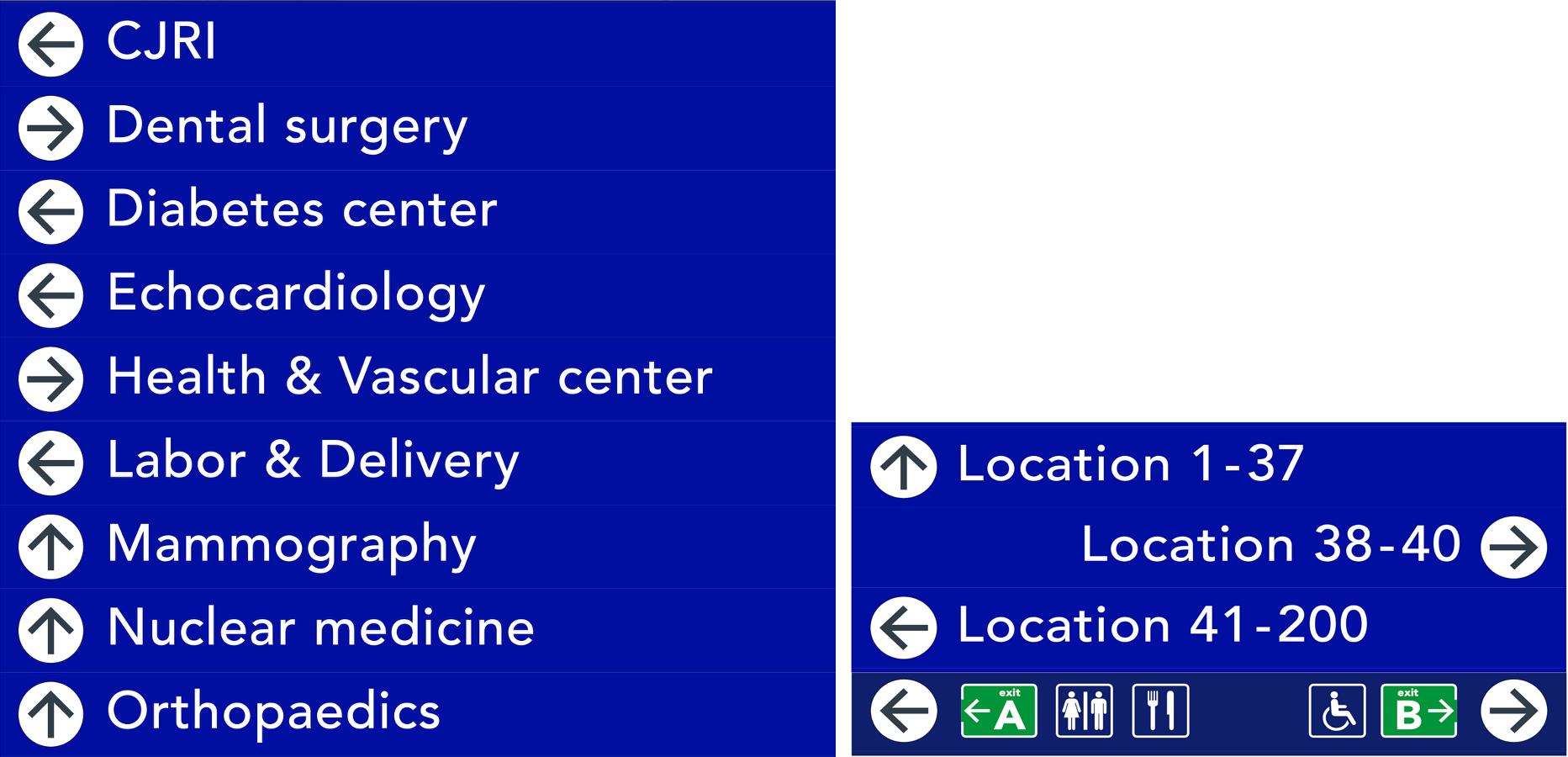
Image Credit: eyedog
Using numerical-based signage tied to appointment types and locations allows for smaller, clearer signs—and avoids overwhelming people with long lists of departments at major decision points. A good rule of thumb is to keep signage to 4–5 pieces of information.
But that’s a challenge when many acute care hospitals exceed a million square feet and may support 50, 75, or 100+ clinical destinations. At these scales, traditional text-based lists can become visual noise.
A numerical system cuts through that overload.
And the key is integration. When registration and appointment communication include the destination number—just like a hotel room—you only have one piece of information to remember. From there, following the numbers becomes simple and intuitive.
A Universal Language
A numerical system is also inherently inclusive. Numbers are universally understood. When you’re unfamiliar with a language, remembering “37” or “121” is far easier than recalling a long department name.
The Tokyo Metro’s Fukutoshin Line is a great example: even if you can’t read the language, the station numbers guide you confidently from point A to B. The same principle can support patients, families, and visitors in hospitals—spaces where emotions already run high.
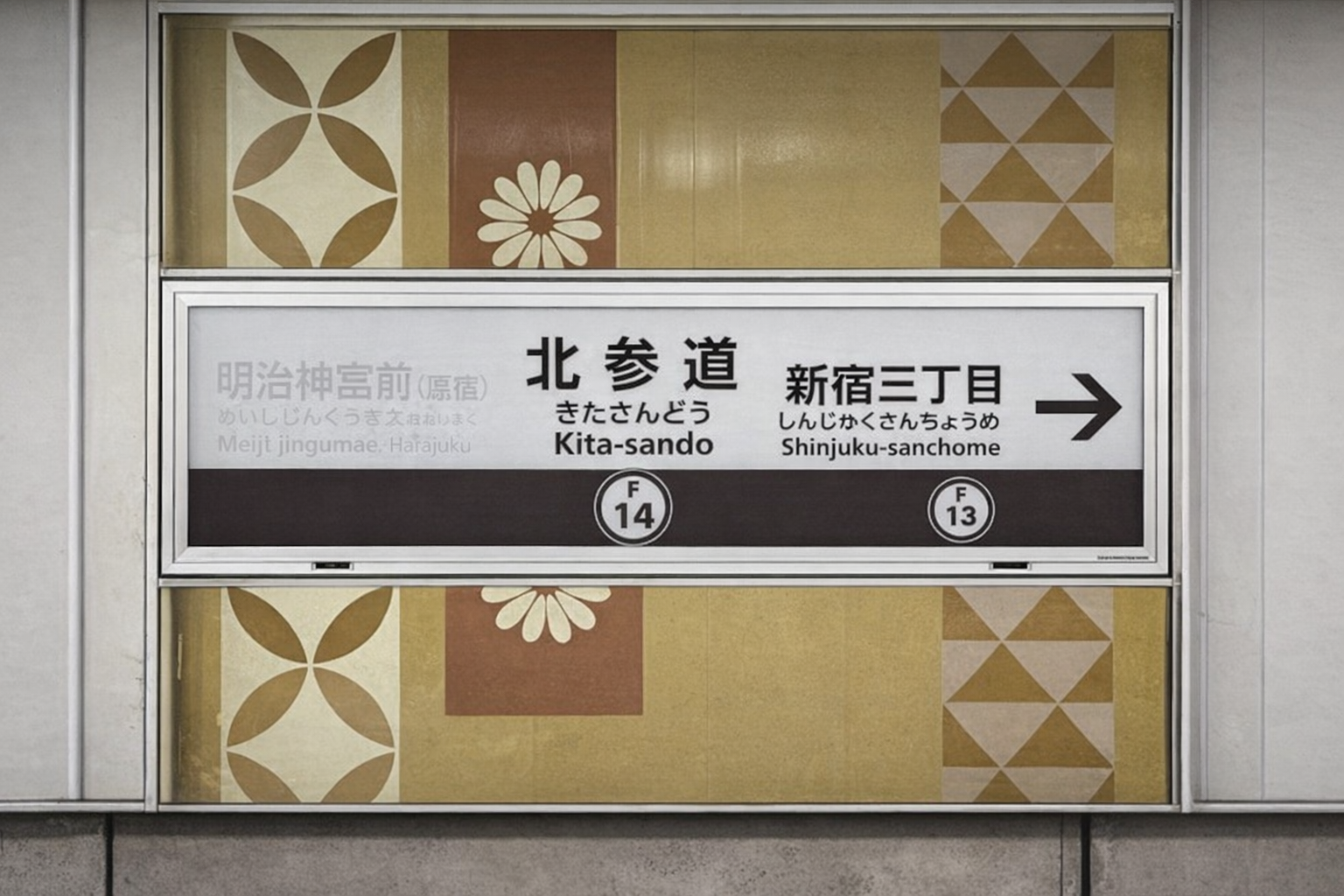
Image Credit: https://raillab.jp
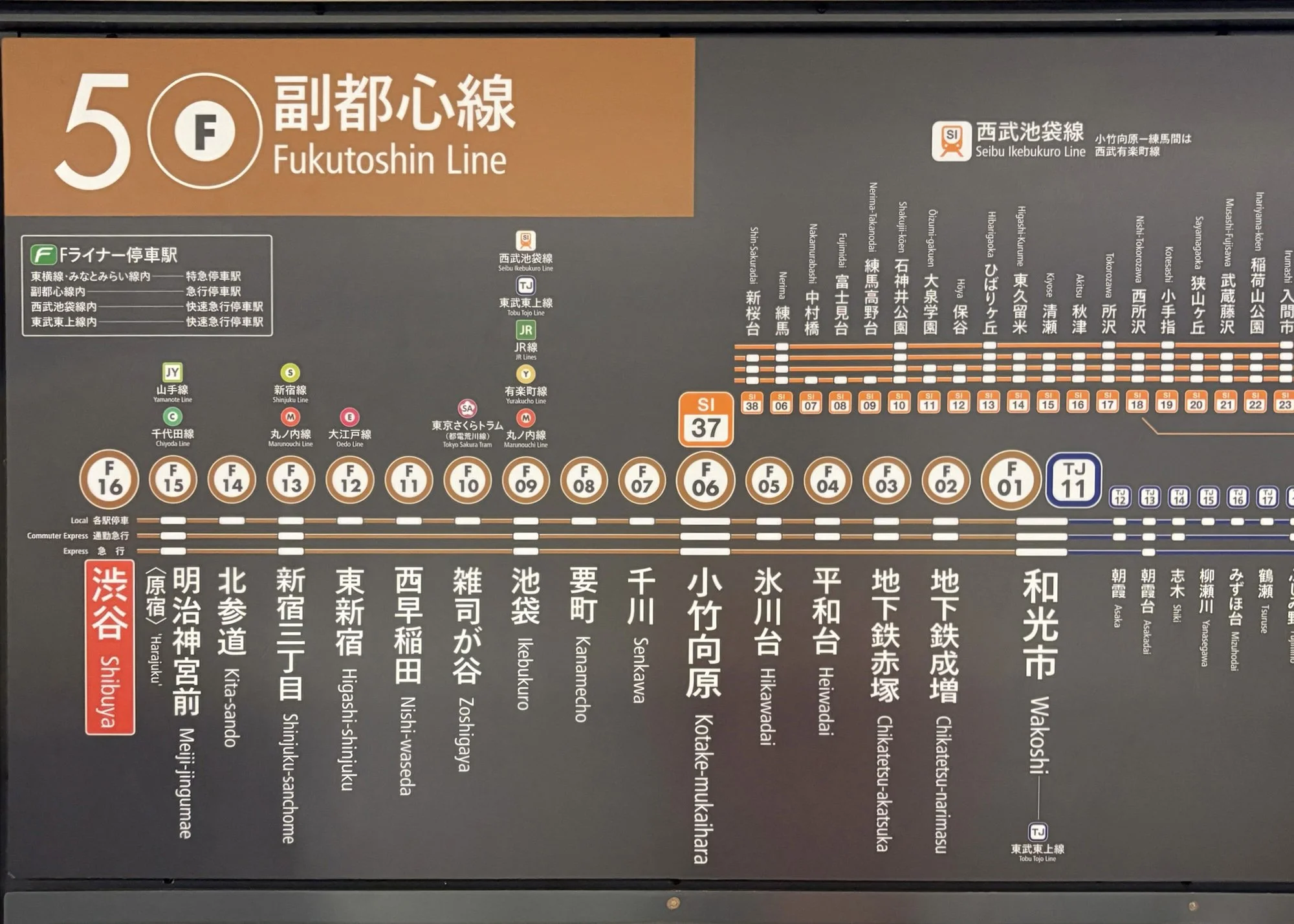
Image Credit: Cody Foo
As healthcare environments continue to grow in complexity, the way we guide people through them must evolve too. Numerical-based wayfinding isn’t just a stylistic choice—it’s a strategic one. It reduces stress, supports inclusivity, simplifies decisions, and helps people focus on what truly matters: their care.
By designing intuitive journeys first, and then layering clear and universal numerical cues, we have the opportunity to make hospital navigation calmer, clearer, and more human.
If we can make even one person’s stressful day a little easier, then the system is doing exactly what it’s meant to do.